

Running Title : Psychosocial and Nutrition Intervention for TB Patients in Nepal.
Bijay Maharjan, Ram Sharan Gopali, N.Ishikawa, K. Okada21Japan-Nepal Health and Tuberculosis Research Association, Research Institute of Tuberculosis/Japan Anti-Tuberculosis Association
Corresponding Author
Bijay Maharjan, Japan-Nepal Health and Tuberculosis Research Association, Kathmandu, Nepal
Email :bjmaharjan@hotmail.com
Abstract:
Directly Observed Treatment Short Course(DOTS) a major intervention of the National Tuberculosis Programme (NTP)was initiated in 1996 in Nepal. Inspite of various interventions, the DOTS programme does not include psychosocial counselling and nutrtional support to the TB patients. Globally, it has been seen that TB patients suffer from psychosocial problems such as feeling of loneliness, stress, stigmatization as well as economic problems. Likewise, a large proportion of them find it difficult to manage food for themselves. Keeping in mind the socio-economic and psychosocial hardships faced by the TB patients,it is essential to provide psycho-social counseling and nutritional support to theneedy TB patients. In view of this Japan-Nepal Health and Tuberculosis Research Association (JANTRA)has beenconducting psychosocial counselling and nutritionalsupport activities since November 2016. The current explanatory case study reports findings from a TB patient who received psychosocial counselling and nutritional support. The psychosocial counselling included understanding patient’s psychosocial problems and providing coping skills inclusive of stress management skills. The nutritional support included distribution of nutritious food to the patient. Overall, it was seen that counselling and nutritional support leads to better treatment adherence and cure. Therefore, it is recommended that the DOTS programme should be strengthened by the integration of psychosocial counselling and nutritional support to the TB patients.
Keywords: DOTS, Tuberculosis, Counselling, Nutrition, Psychosocial Support, Stress Management
Introduction
Directly Observed Treatment Short Course (DOTS),is one of the most successful programme in Nepal with nationwide coverage. In 2017, a total of 31,764cases of tuberculosis (TB)were notified under the National Tuberculosis Programme(NTP)of whom91% were successfully treated.[1]Despite improved treatment success rates, aboutone third of the TB patients face psychosocial problems coupled with limited knowledge on nutrition. Since, the disease mainly affects the poor, vulnerable and marginalized groups of the community a large proportion of the TB patients are unable to arrange food for themselves and their families. Further, TB patients from these groups have poor psychosocial and nutritional status thus affecting treatment literacy and adherence. Moreover, the emergence of drug-resistant tuberculosis is iatrogenic and suggests that the current biomedical and public health approaches for tuberculosis are failing.[2]
To improve the efficacy of DOTS programme, along with free medicine and directly observed treatment, DOTS programme should be enriched with psychosocial and nutritional counselling and support to TB patients and their family members. Japan-Nepal Health and Tuberculosis Research Association (JANTRA)has been conducting psychosocial counselling and nutritional support activities for TB patients in the urban DOTS clinic of Kathmandu Metropolitan City (KMC).The target population are all the under treatment TB patients in 27 urban DOTS clinics in Kathmandu during the period of November 2016 to April 2017.
With this background the current case study aims to describe the social factors affecting the TB patients and the psychosocial problems and challenges faced by a TB patient. Further, added value of psychosocial counselling and nutritional support to strengthen DOTS programme has also been illustrated.
Methodology
The present study is an explanatory case study of a TB patient who received the psychosocial and nutritional support. Data were collected during the psychosocial counseling session and recorded after the consent of the TB patient in the urban DOTS clinic of ward no.16 of Kathmandu by the field supervisor of JANTRA. The recorded data were transcribed and used for analysis and interpretation. Before initiation of the interview, informed consent from the TB patient was taken and consent has been obtained to publish the information without disclosing patient identity.
Before the implementation of the project a baseline study was carried out to assess the psychosocial status of TB patients in the urban DOTS clinics of KMC.A total of 297TB patients were enrolled in the study. Table 1 shows, about 4.4% of the TB patients were not sure whether the disease will be cured or not. Approximately 36.4% of the patients felt loneliness. Furthermore, about 5.1% of the patients did not receive any help from their family members. Similarly, 20.9% of the TB patients left their job or schooling and around6.4% have experienced stigma and discrimination. Based on these findings a framework for problems and solutions was designed by the organization.
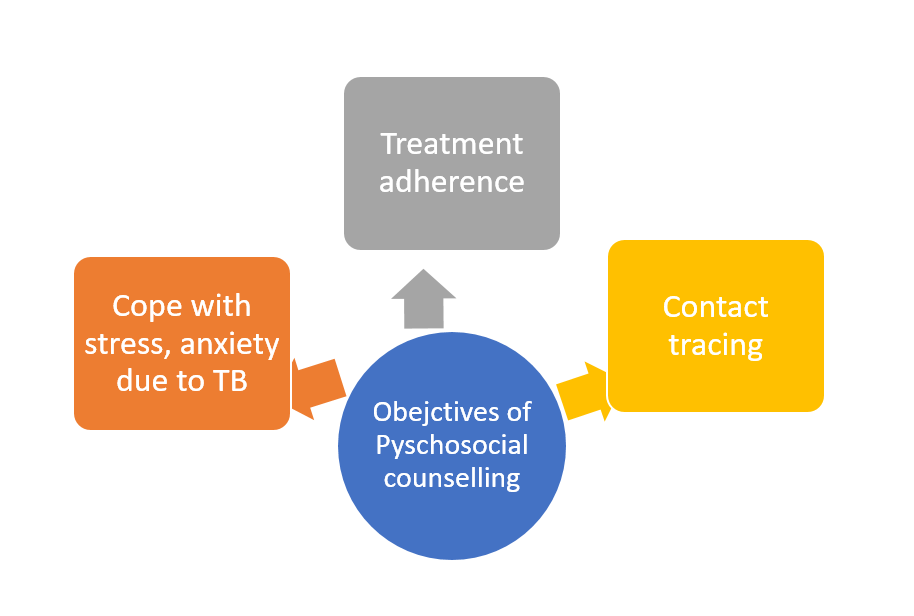
the DOTS clinic in-charge and urban health volunteers were oriented about the need and process of psychosocial counselling and nutritional support activities. Secondly, field supervisor along with the support of the health care workers assessed the psychosocial and nutritional needs of the TB patients through consented face to face interviews. On the basis of these findings the TB patients were provided with psychosocial counselling which included coping strategies for distress, fear, anxiety, stigma and discrimination. Furthermore, the poor and vulnerable patients were supported with foods for nutritional support. The eligibility criteria to receive nutritional support included daily wage labor, patients with no other economically active family member, single women/old age, vulnerable groups like key populations living in slums, migrated, disadvantages, factory workers, school children. During the project period, a totalof84 TB patients received nutritional support.
Findings
Kanchi Shrestha,48 years female(name changed)residing at Balaju, Kathmandu was diagnosed with Gland TB.TB treatment was started at the urban health clinic of ward no. 16, Kathmandu. The patients lives with her husband who is paralyzed on pretext of being injured during 2015earthquake. The family lives in a temporary settlement made of tin as the original house was completely destroyed during the earthquake. The patient has two daughters, both of them are married and live with their respective families.
The patient was illiterate and lacked awareness regarding TB before being diagnosed with the disease. The patient earns through daily wage labor and has not gone to work since being diagnosed with TB. She said in her own words “ I feel isolated and nobody is ready to help me”. She said that “when I was healthy, I earned some money to eat, now it has been very difficult.” I feel that my husband and I might not survive for long .” She further added “I have no dream of making a house, I just want to get cured and take care of my husband.” This reveals that TB does not only affect the physical health of the patient, but also affects the mental health by increasing distress, feeling of hopelessness and fear of dying. She said “ I have not shared my TB status to anyone if they know I will not be called to work.” This indicates persistence of limited knowledge, stigma and discrimination associated with TB along with fear of social exclusion. Despite socioeconomic & psychological distress the patient has been regularly taking TB medicine on DOTS since her enrollment in the treatment. “Hari sir-(DOTS incharge of ward no.16) has told me I am doing well” She believes in herself that she will be cured and will be able to go to work and take care of her husband. However, she complained that after the initiation of the treatment she has been more affected by the gastritis problems.
The health care workers provided psychosocial counselling to the patient so as to cope up with feelings of loneliness. Further, coping strategies to manage distress and fear were also taught. The key messages during counseling sessions included restarting previous pleasurable activities, identifying supportive family members and friends to revitalize social network. Stress management techniques like regular exercise and positive thinking were reinforced. She was advised to avoid negative thoughts and self talks, hopelessness and alcohol intake. Keeping in mind her financial status and appetite loss the JANTRA team supported her with supplementary nutrition. The supplementary nutrition was provided to the patient at her home and included major food item such as eggs, legumes, cereals, fruits, biscuits, etc. The patient had tears in her eyes and was filled with gratitude while she received this support. Now, she has completed the TB treatment and is back to her normal life.
The findings from the above case study indicate that TB treatment should not merely comprise of TB drugs but should also include psychosocial support and create a conducive environment so that someone can listen to patients’ problems. Needy TB patients should be supported by providing foods which will help them to meet nutritional requirements. This in return will improve the psychosocial status and treatment adherence of the TB patients.

